Discovering Georgia: A Family Friendly Adventure in the Caucasus
Discovering Georgia: A Family Friendly Adventure in the Caucasus Georgia, a country between Europe and Asia, is famous for its
Angelica Hazel Toutounji is an Australian freelance travel writer published in The National and other lifestyle platforms. Based in South Australia, she writes about family travel, cultural identity and meaningful destination experiences through a personal lens. A wife, mother and proud Muslim convert, she enjoys exploring different cultures, discovering local cuisines and visiting mosques around the world. She is also the host of the travel podcast The Travel Date, where she shares personal travel stories and conversations about global journeys.
Australia is a land of contrasts and natural wonder, from pristine beaches to vibrant cities, wide open spaces and red desert sand, making it hard to encapsulate in words. Known for being one of the most linguistically and culturally diverse countries in the world and home to one of the oldest living cultures in the world, the Aboriginal and Torres Strait Islander people, makes Australia not only a melting pot of people and culture but a truly diverse country that needs to be seen and experienced to be truly understood.
Since British colonization in 1788 with the arrival of the First Fleet, Christianity has had a significant impact on Australian history. However, waves of migration over the years has radically influenced the culture and religious
landscape of Australia and now the country is often regarded as a secular nation. In fact, in recent times there has been a growing number of people that identify as having “no religion” at all. Current statistics find that Islam the second largest faith after Christianity in Australia. Today Australia is considered a multicultural nation with racial, cultural and religious diversity, however it is not often the first place that comes to mind for the Muslim traveller.
Perhaps Australia’s complex history of early settlement and colonisation, along with the devastating treatment of First Nations peoples and the implementation of the White Australia Policy, which restricted non European immigration, has too heavily shaped perceptions of the nation’s past. Yet beyond these injustices lies a lesser-known and deeply fascinating truth: the presence of Islam in Australia actually predates permanent European settlement.
So how did Islam find its way to this vast island continent?
Settle in and take a seat as we explore the rich history, inspiring journeys, and enduring legacy of the first Muslim men who came to Australia’s shores.
The first trace of Islam in Australia- The Makasar Trepangers
Historians trace the arrival of Islam in Australia to Makasar traders from Sulawesi who sailed to the Arnhem land coast between the 16 th and 17 th centuries. They formed close ties with Aboriginal communities, influencing culture and even entering into mixed marriages. Although they never settled permanently, their long-standing trade relationships ended in 1907 when the newly formed Australian government banned the industry to protect “territorial integrity”. Despite this forced separation evidence of their presence endures in Arnhem Land through rock art, ceremonial practices and song.
The arrival of the Muslim Cameleers
On the other side of Australia down in Port Melbourne, the first Muslim Cameleers arrived in 1860 to participate in the Burke and Wills Expedition. This mission involved nineteen men and a mix of camels and horses with the goal of crossing Australia from south to north. The camels were chosen for to their ability to survive in harsh conditions and their ‘native handlers’ accompanied them. Although this expedition was a debacle and many lives were lost, the resilience and reliability of camels was proven.
Following the Burke and Wills expedition, small groups of cameleers started arriving in South Australia. These men were able to earn a small fortune carrying goods on camels and before long the camel business in South Australia was thriving. This was also the time when the Overland Telegraph Line was established and the cameleers not only supported this endeavour but played a vital role in its construction and the exploration of Australia’s inland.
These Muslim cameleers hailed from Afghanistan, Baluchistan and other provinces in the region of north-western Indian (now Pakistan). Despite being from diverse cultural backgrounds the men were collectively referred to as “Afghans” due to the predominant presence of Afghan tribesmen amongst them. This term was used by the Europeans and even adopted by the cameleers themselves. Amongst the cameleers were a small minority of European descendants, however the Muslim cameleers had a reputation for being the most efficient and best at their job.
In the west of Australia, the first camels and cameleers from Karachi arrived in Fremantle in September and October of 1887. Cameleers from South Australia also made their way west due to the gold rush discoveries in Coolgardie and
Kalgoorlie.
The cameleers left their homelands and families to embark on a new life in Australia. They set up homes, forged communities and became an integral part of the social landscape in outback Australia. They set up small mosques in
outback towns and eventually larger cities. The ‘Afghan’s’ adhered to an Islamic way of life including daily prayer, traditional attire and halal practices.
They came to Australia not to proselytise but to forge communities and create places where they could worship without fear of discrimination.
The cameleers were young men forced to travel solo, leaving their family and wives at home. The majority fulfilled their work contracts and made the journey back to their homeland. However, few did remain and settle in Australia and some established relationships with European and Indigenous women. The descendants remain small in numbers yet retain strong links with
their heritage.
The cameleers were young men forced to travel solo, leaving their family and wives at home. The majority fulfilled their work contracts and made the journey back to their homeland. However, few did remain and settle in Australia and some established relationships with European and Indigenous women. The descendants remain small in numbers yet retain strong links with
their heritage.
Retracing the past
Sadly, the legacy of the Muslim cameleers remains largely unfamiliar to many everyday Australians. Outside the regions they once called home, the community groups who have carefully preserved their stories, and those with a
deep passion for history, their contribution is seldom recognised. To truly understand their lives and the imprint they left on this country, one must consciously go searching for it.
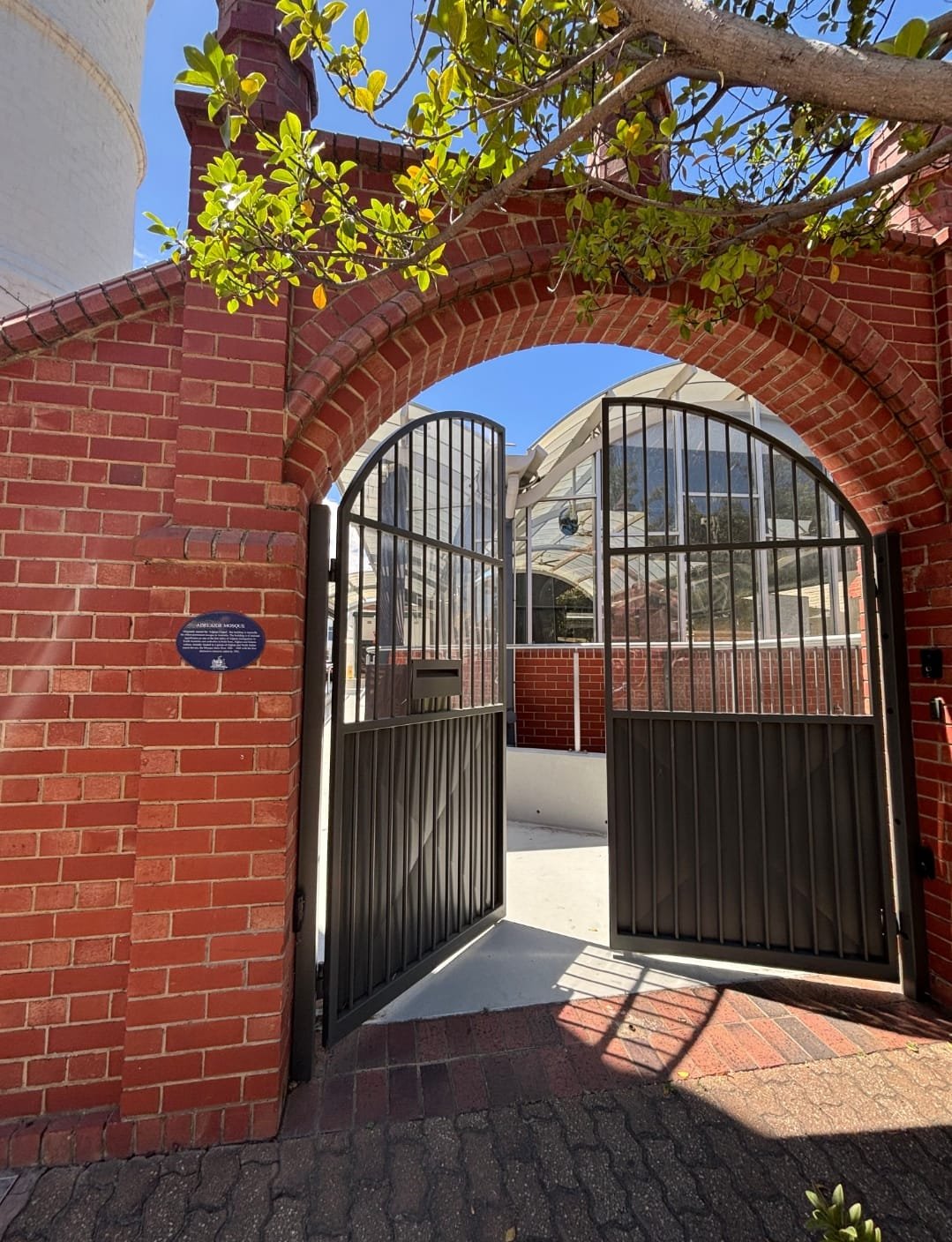
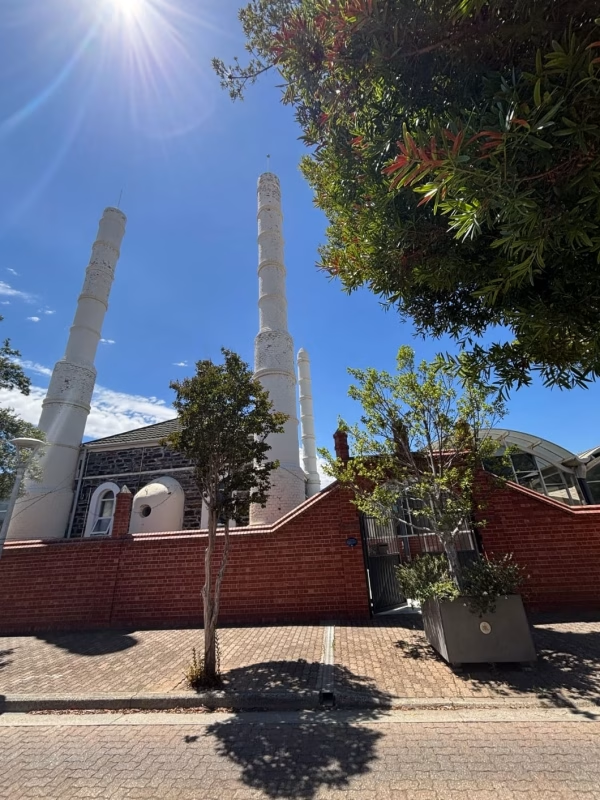
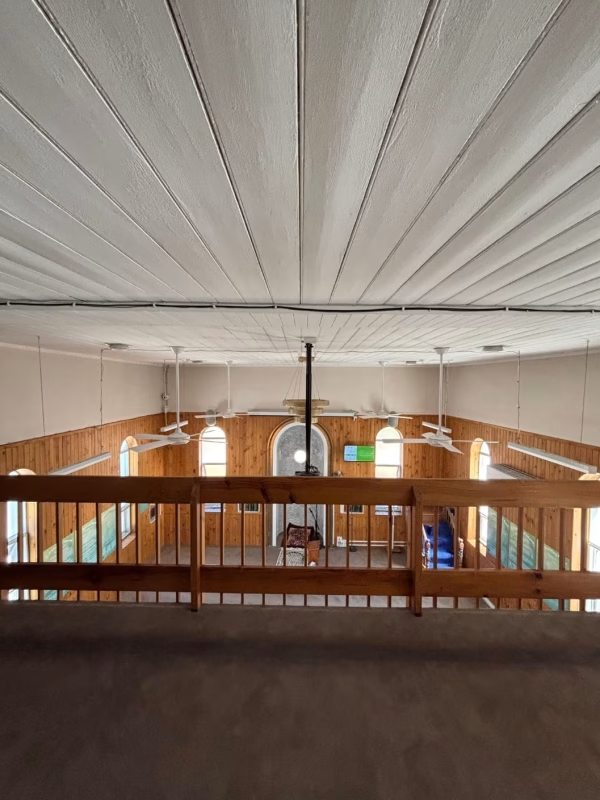
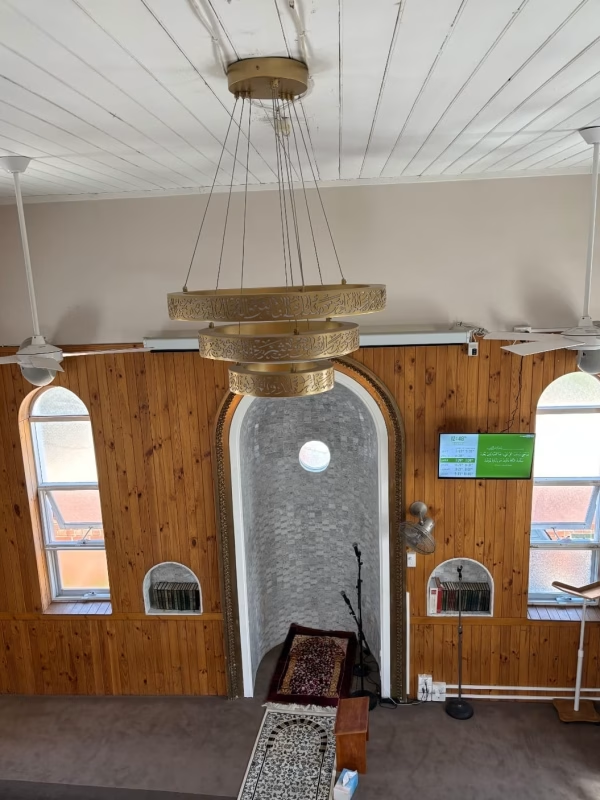
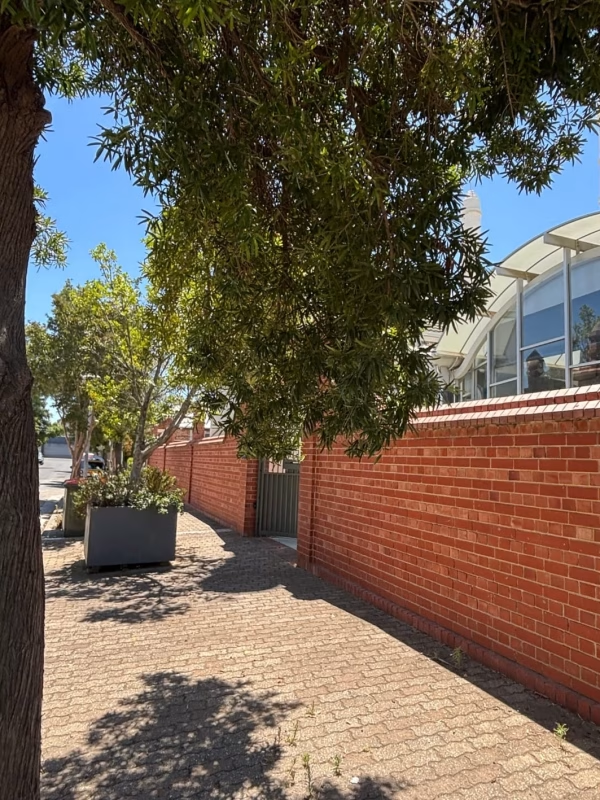
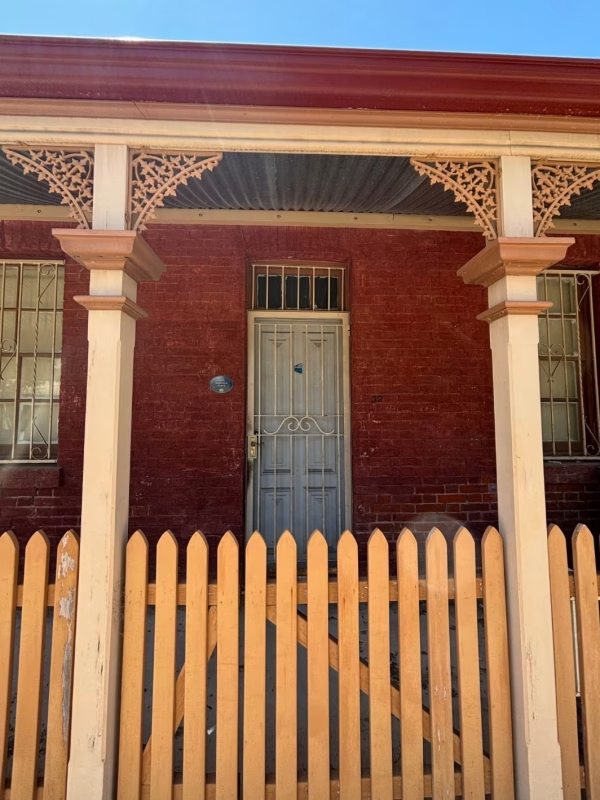
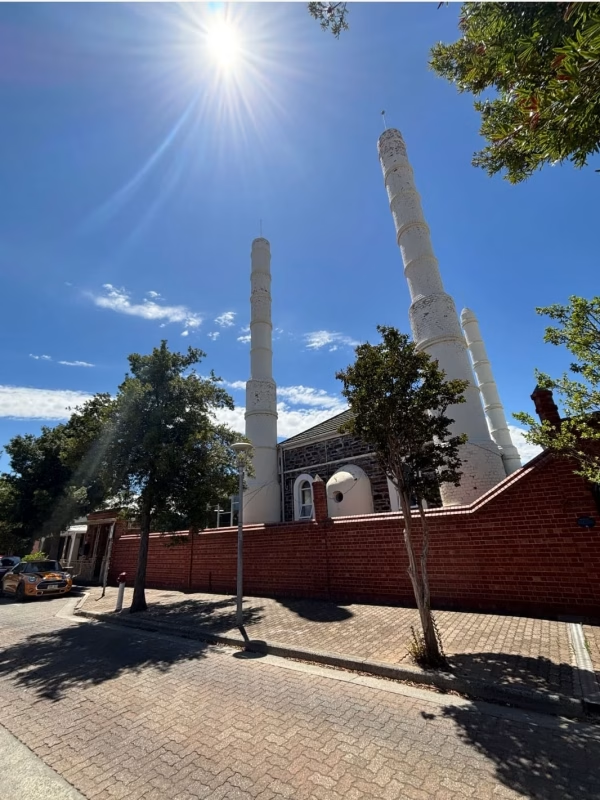
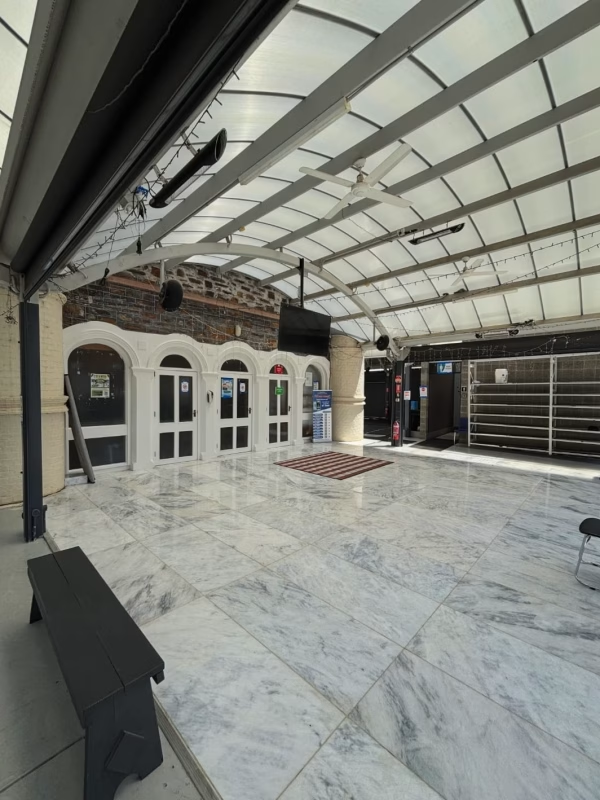
In Little Gilbert street, in the heart of Adelaide, lies Adelaide City Mosque, the oldest surviving mosque in Australia. This Mosque plays homage to the Afghan and North Indian camel drivers with a plaque at its entrance. Further north in the outback town of Marree, lies remnants of the first mosque ever built in Australia.
Remnants of the past and respect for the legacy of the ‘Afghan’ cameleers can also be seen threaded throughout South Australia’s railway history. Travellers can visit Port Augusta and take a ride on the Afghan Express via the Pichi Rich Railway. This train journey takes the route of the old Ghan train starting at Port Augusta and ending at Quorn, giving passengers the ability to witness the ancient beauty of the Flinders Ranges. Australia’s most legendary train journey, The Ghan, was also named after these iconic explorers and their legacy is referenced within their Journey guide. The Ghan is a multi day rail itinerary that traverses between Adelaide and Darwin and vice versa. The Ghan is a bucket list for many travellers as it includes spectacular scenery, unique off train excursions, rich history and an elevated level of comfort. At present halal certified meats are not available, however Muslim travellers have a range of pork free meals on offer and there is strict separation of pork and alcohol containing items menu items.
Other significant sites where visitors can learn more include the Broken Hill Mosque Museum, The National Road Transport Museum in Alice Springs, the Northern Territory Museum, the State Library of Western Australia and the
Western Australia Museum.
Last but not least, a must visit stop for Muslim travellers is in Melbourne at the Islamic Museum of Australia. This museum houses permanent galleries centred on Islamic faith, art, architecture, contribution to civilization and Australian Muslim history and includes references to the Afghan cameleers.
Final Thoughts
Australia is an interesting place filled with colourful characters, tall tales, a diverse breath taking landscape and a rich and complex history. The arrival of Muslims in Australia both historically and to this day has truly added to the
vibrant tapestry of Australian culture.
Reference List
Adelaide City Mosque (2026), ‘Our History’,
https://adelaidecitymosque.org.au/our-history/, accessed 15 January 2026.
Australian Bureau of Statistics (2022),’ Religious affiliation in Australia’,
https://www.abs.gov.au/articles/religious-affiliation-australia, accessed 14
January 2026.
Australian Federation of Islamic Councils (n.d) ‘History of Islam in Australia’,
https://afic.com.au/history-of-islam/, accessed 18 th January 2026.
Australian Government, ‘Afghan cameleers in
Australia’, http://australia.gov.au/about-australia/australian-story/afghan-
cameleers, accessed 20 January 2026.
Jones P and Kenny A (2010) ‘Australia’s Muslim Cameleers: Pioneers of the
inland 1860-1930s’. Wakefield Press, South Australia
National Museum Australia (2024), ‘Trade with the Makasar’,
https://www.nma.gov.au/defining-moments/resources/trade-with-the-
makasar, accessed 18 th January 2026.
Rezaei O, Abidi H and Banham V (2021) ‘Integration experiences of Former
Afghan Refugees in Australia: what Challenges Still remain After becoming
citizens?’, Int J Environ Res Pub Health, vol. 18 (19), doi:
10.3390/ijerph181910559
South Australian History Hub (2025), Afghans,
https://sahistoryhub.history.sa.gov.au/subjects/afghans/ , accessed 25 th
January 2026.
State Library of Western Australia (n.d) ‘Afghan Cameleers’,
https://exhibitions.slwa.wa.gov.au/s/migration/page/afghan, accessed 15
January 2026.

Discovering Georgia: A Family Friendly Adventure in the Caucasus Georgia, a country between Europe and Asia, is famous for its

By Halaltravelpal | Visiting Qatar for Around 5 Days Some of the best travel advice may not come from tourists.
South Africa Part 1: Planning the trip and CapeTown An Unforgettable Halal Family Adventure By Naumaan Qamar Part1: Planning the